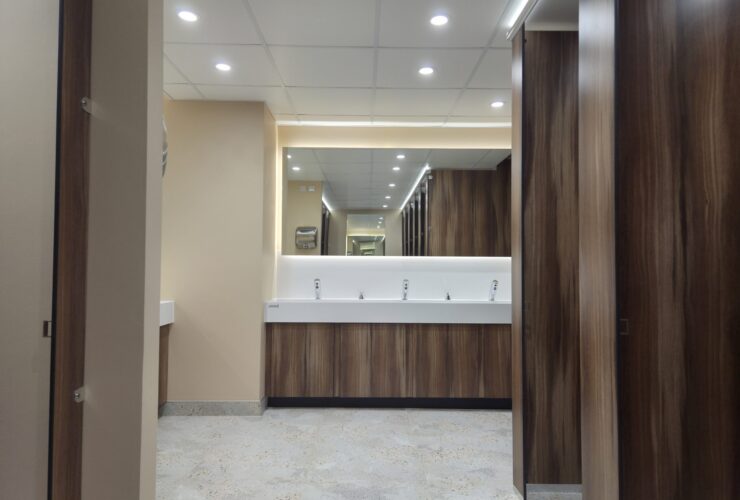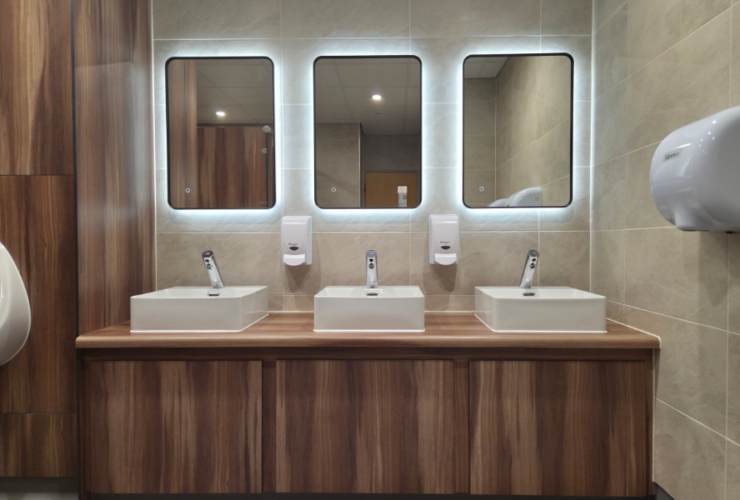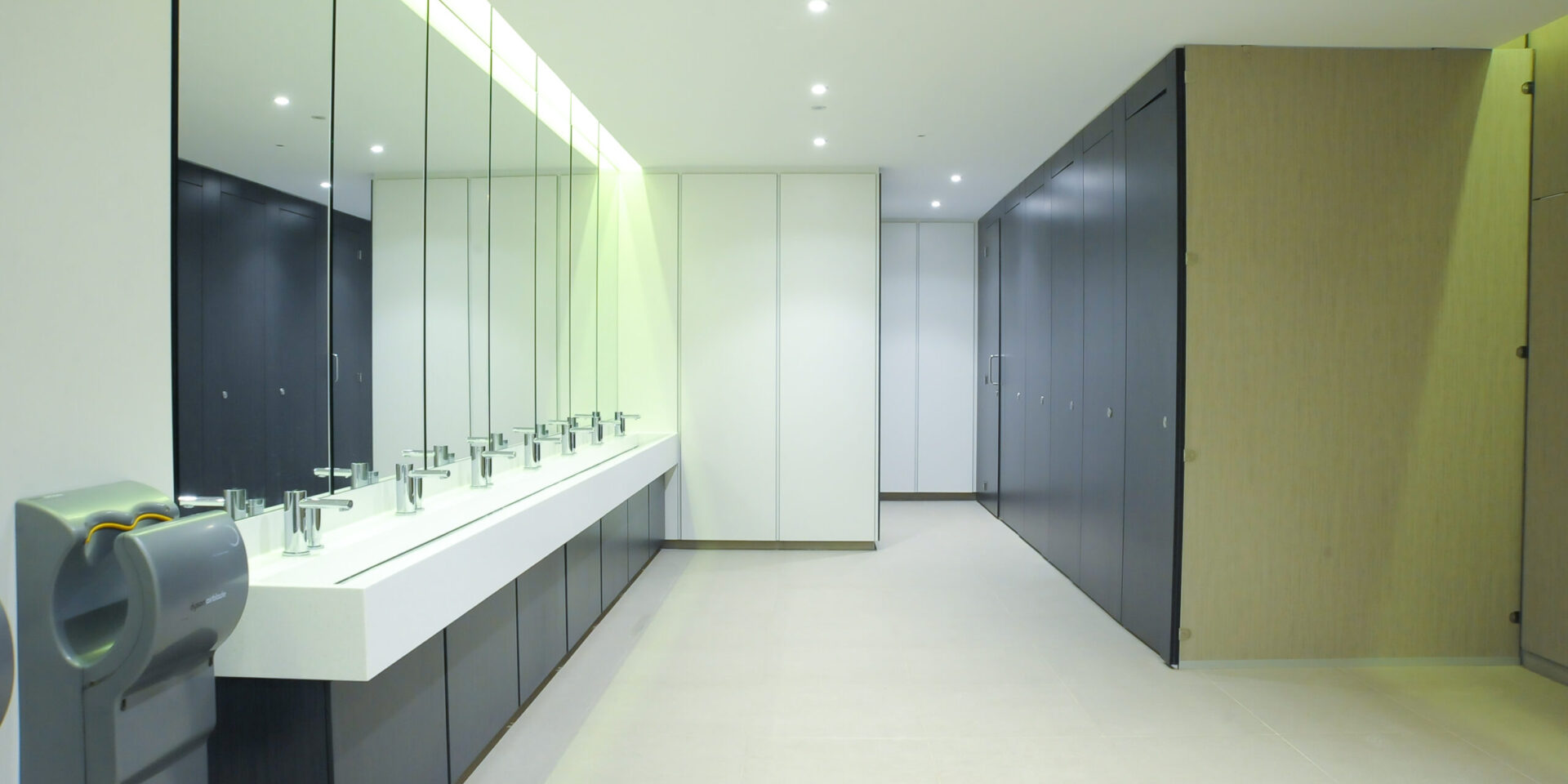
In UK food manufacturing, hygiene isn’t just a priority – it’s a non-negotiable. From audit readiness to brand protection, every element of a facility must actively support food safety. Yet one critical area is often overlooked in strategic planning: washrooms.
For operations leaders, technical managers, and facilities professionals, washroom design plays a far more significant role than compliance alone. When designed correctly, these spaces become a frontline defence against contamination risk – particularly in high care and high risk environments.
Why washroom design matters more than you think
Washrooms sit at a critical junction between people and production. Poorly designed facilities can introduce risks that undermine even the most robust HACCP systems.
Common challenges include:
- Inadequate hand hygiene compliance
- Cross-contamination between zones
- High-touch surfaces acting as contamination points
- Inefficient layouts that disrupt hygiene protocols
In high care food environments, where microbiological control is paramount, these risks are amplified.
The solution isn’t just stricter procedures – it’s better design.
Supporting hygiene through intelligent washroom design
Effective washroom design should make the right behaviours the simplest behaviours. That means reducing reliance on human intervention and creating environments that guide compliance naturally.
- Clear zoning and controlled flow
In high care areas, movement must be deliberate and controlled. Washroom layouts should:
- Separate entry and exit routes where possible
- Prevent crossover between ‘clean’ and ‘dirty’ pathways
- Align with changing procedures and hygiene barriers
This ensures that staff transition into production areas in a controlled, compliant way.
- Hands-free operation as standard
Touchpoints are one of the most common vectors for contamination.
Specifying non-contact solutions – such as:
- Sensor-operated taps
- Automatic flush systems
- Touch-free soap and drying units
…significantly reduce the risk of pathogen transfer while reinforcing best practice.
- Materials that withstand hygiene regimes
Food manufacturing environments demand frequent and often aggressive cleaning.
Washroom materials must be able to withstand:
- Chemical cleaning agents
- High moisture levels
- Regular washdown procedures
Smooth, non-porous, and impact-resistant materials help prevent bacterial harbourage while maintaining long-term performance.
- Eliminating dirt traps and hidden voids
Design details matter. Poorly considered joins, exposed pipework, and inaccessible voids can quickly become hygiene risks.
Integrated systems with:
- Sealed duct panels
- Minimal joints and crevices
- Fully encapsulated services
…make cleaning more effective and reduce the risk of contamination build-up.
High care environments: raising the standard
In high care and high risk food production areas, expectations are even higher. Washrooms must actively support strict hygiene protocols and regulatory compliance.
Key considerations include:
Controlled access and compliance
Access to high care zones often requires specific hygiene steps. Washroom and changing areas should be designed to enforce:
- Mandatory handwashing
- Correct gowning procedures
- Clear, intuitive user journeys
Design should remove ambiguity – staff should instinctively follow the correct process.
Integration with hygiene barriers
Washrooms should not operate in isolation. They must integrate seamlessly with:
- Hygiene stations
- Boot wash systems
- Airlocks and barrier controls
This creates a continuous, controlled transition into high care production spaces.
Audit-ready by design
Whether aligned to BRCGS standards or retailer requirements, facilities must stand up to scrutiny.
Well-designed washrooms support:
- Easy inspection and maintenance
- Documented cleaning regimes
- Visible commitment to hygiene excellence
Reducing risk through behavioural design
Even the most rigorous protocols rely on human behaviour. Good design reduces reliance on training and enforcement by making compliance intuitive.
Consider:
- Logical, step-by-step layouts that guide users
- Clear visual cues and signage
- Well-lit, clean environments that reinforce standards
When the environment supports the process, compliance becomes the default – not the exception.
A strategic investment in food safety
For decision makers, washroom design should be viewed not as a cost centre, but as a risk management tool.
Done well, it can:
- Reduce contamination risk
- Support audit performance
- Improve operational efficiency
- Protect brand reputation
In high care food manufacturing, where the margin for error is minimal, every detail matters.
Washrooms are no exception – they are a critical part of the hygiene chain.
Design them accordingly.
Get in touch with our washroom experts to learn more about how our team can support you in the design and installation of compliant washrooms that elevate your hygiene protocols.