A practical guide for facilities across London & the South East
In food manufacturing, hygiene isn’t just important – it’s critical.
From production lines to welfare facilities, every surface, finish and material plays a role in preventing contamination, maintaining compliance, and protecting your reputation.
And while washrooms may sit outside your production areas, they remain a key part of your hygiene strategy – directly influencing staff behaviour, cleanliness standards and operational risk.
At Interfix, we design and deliver high-performance washrooms for demanding environments. In this guide, we explore the best materials for food manufacturing washroom refurbishments – and why they matter.
Why materials matter in food manufacturing environments
Food manufacturing facilities operate under strict hygiene regulations.
Surfaces must be:
- Easy to clean and disinfect
- Resistant to bacteria and moisture
- Durable under heavy, continuous use
- Designed to prevent cross-contamination
UK guidance is clear – floors, walls and surfaces must be “smooth, hard-wearing, washable and easy to clean” to support food safety standards.
The same principles apply to your washrooms.
Because poorly specified materials don’t just wear out – they introduce risk.
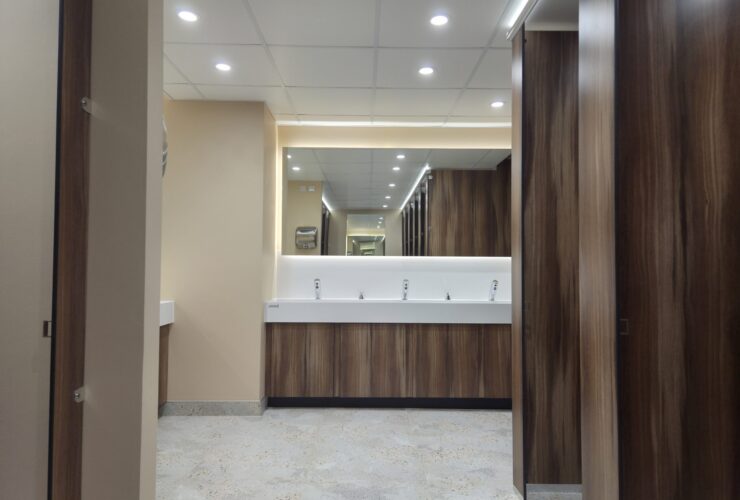
- Solid Grade Laminate (SGL) – the industry standard
For food manufacturing washrooms, Solid Grade Laminate (SGL) is widely considered the benchmark material.
Why it works:
- Fully waterproof and non-porous
- Highly resistant to impact, chemicals and moisture
- Easy to clean and disinfect
- Anti-bacterial properties available
SGL is ideal for:
- Toilet cubicles
- Duct panels
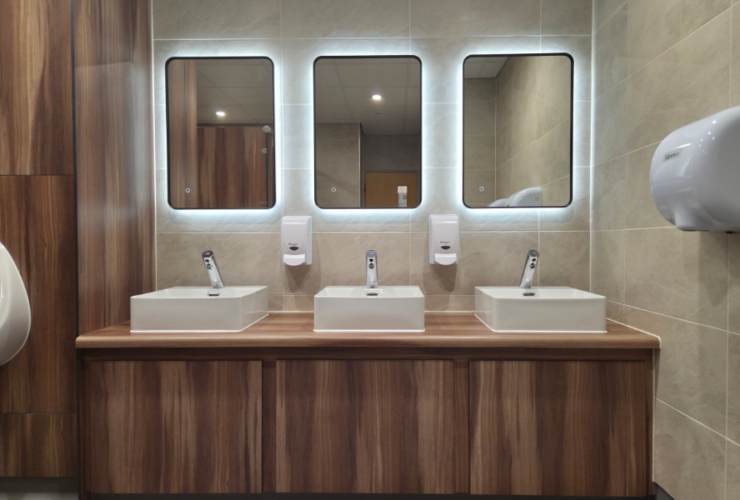
- Vanity units
In high-traffic environments such as factories and processing plants, it delivers long-term durability with minimal maintenance – a key requirement where downtime is not an option.
- Hygienic Wall Cladding (PVC & FRP Panels)
Traditional tiles may look clean – but in food environments, grout lines can harbour bacteria.
That’s why many manufacturers are moving towards hygienic wall cladding systems.
Key benefits:
- Seamless or minimal-joint installation
- Non-porous, wipe-clean surfaces
- Resistant to mould, moisture and chemicals
- Faster to clean, reducing maintenance time
These systems support strict hygiene protocols by eliminating areas where bacteria can accumulate, helping reduce contamination risk.
- Resin & safety flooring
Washroom floors in manufacturing facilities face constant challenges:
- Water exposure
- Cleaning chemicals
- Heavy footfall
- Slip risks
Resin flooring systems are designed to handle exactly that.
Why resin flooring is ideal:
- Seamless, non-absorbent finish
- Slip-resistant for safety compliance
- Highly durable and chemical-resistant
- Easy to clean and maintain
Food safety guidance emphasises that floors must be maintained in good condition and easy to disinfect.
Resin flooring meets these requirements while improving safety for your workforce.
- Stainless steel fixtures & fittings
Where hygiene is critical, stainless steel remains unmatched.
Common applications include:
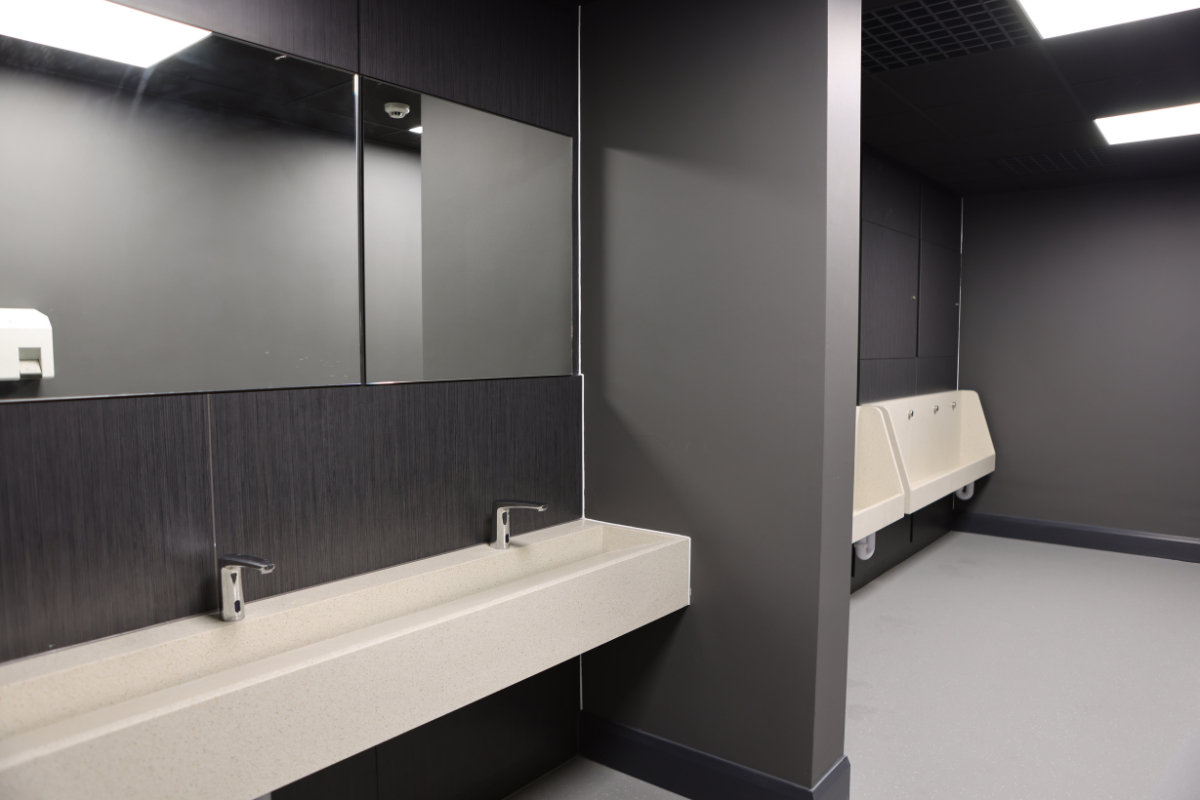
- Wash troughs and basins
- Soap dispensers
- Hand dryers and accessories
Key advantages:
- Non-porous and highly hygienic
- Resistant to corrosion and chemicals
- Extremely durable under heavy use
- Easy to sanitise
In environments where hand hygiene is essential – especially in food production – materials must support frequent cleaning and minimise contamination risks.
Stainless steel delivers on all fronts.
- Touch-free & sensor-activated solutions
While not a “material” in the traditional sense, specifying the right finishes means thinking beyond surfaces.
Touchpoints are one of the biggest sources of contamination.
Best practice includes:
- Sensor taps
- Automatic soap dispensers
- Touch-free flush systems
- Hands-free waste bins
Food hygiene guidance highlights that handwashing facilities must be properly equipped and hygienically maintained.
Reducing contact points helps reinforce these standards – while improving user experience.
- Anti-microbial & easy-clean finishes
Modern washroom design for food manufacturing increasingly incorporates anti-microbial coatings and finishes.
These materials:
- Inhibit bacterial growth
- Support cleaning regimes
- Maintain hygiene between cleans
Combined with the right cleaning processes, they help facilities meet the core principles of food hygiene – particularly cleaning and cross-contamination control.
Designing washrooms for compliance in London & the South East
Food manufacturers across London and the South East face rigorous oversight – from Environmental Health Officers to internal audits.
Washrooms must:
- Be separated from food production areas
- Include adequate handwashing facilities
- Be well ventilated and easy to maintain
- Support clear hygiene practices
Regulations also require that toilets do not open directly into food handling areas and include appropriate ventilation and separation.
Material specification plays a crucial role in meeting these standards – not just at installation, but long-term.
The Interfix approach
At Interfix, we understand that in food manufacturing, there is no margin for compromise.
We design washrooms that:
- Support hygiene and compliance
- Withstand demanding operational environments
- Reduce maintenance and lifecycle costs
- Enhance staff welfare and usability
Our turnkey approach ensures every detail – from material selection to installation – is carefully considered and expertly delivered.
Final thoughts
In food manufacturing environments, the right materials don’t just improve durability – they protect your operation.
From SGL cubicles to resin flooring and hygienic wall systems, every choice contributes to:
- Better hygiene standards
- Reduced contamination risk
- Improved efficiency and maintenance
- Long-term cost savings
Because in this sector, performance isn’t optional – it’s essential.
Planning a Washroom Refurbishment?
If you’re upgrading washrooms across a food manufacturing facility in London or the South East, our team can help you design a solution that is compliant, durable and built for your environment.