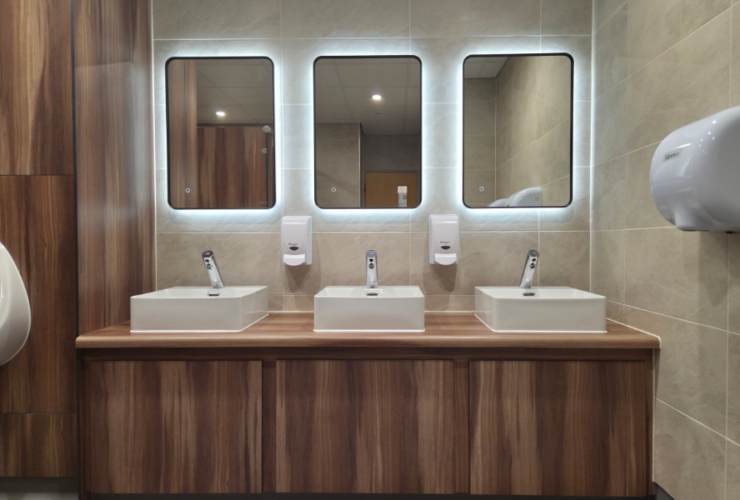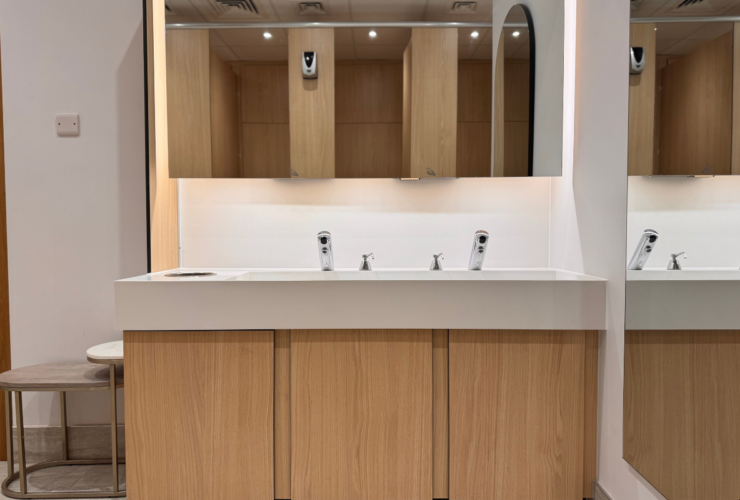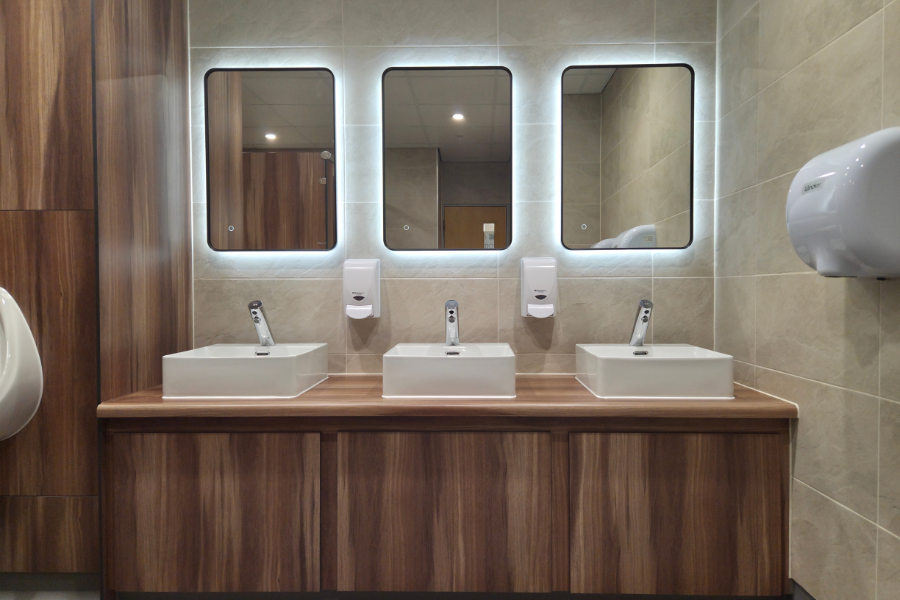
Office washrooms are often one of the most overlooked areas of a workplace – until they become a problem.
For employees, clients, visitors and tenants, washroom facilities can shape perceptions of an organisation far more than many businesses realise. Poorly maintained or outdated washrooms can negatively impact workplace experience, reflect badly on a brand and create avoidable maintenance and operational challenges.
At the same time, business owners, commercial landlords and developers face increasing pressure to create workplaces that are not only functional, but attractive, sustainable and capable of meeting modern expectations.
The challenge? Every building, workforce and commercial environment is different.
Whether you are upgrading an ageing office, preparing a commercial space for new tenants or planning a new development, improving office washrooms requires careful consideration. The right solution balances durability, aesthetics, hygiene, accessibility and long-term value – all while minimising disruption to day-to-day operations.
Why office washrooms matter more than ever
Historically, office washrooms were viewed as purely practical spaces – necessary but rarely prioritised.
That mindset is changing.
In today’s workplace environment, employee expectations have shifted. Businesses are increasingly focused on workplace experience, wellbeing and creating environments people want to spend time in. At the same time, commercial landlords and developers are under pressure to ensure buildings remain attractive, competitive and fit for purpose.
Office washrooms now contribute to:
- Employee satisfaction and wellbeing
- Workplace perception and company culture
- Tenant attraction and retention
- Visitor and client impressions
- Accessibility and compliance
- Long-term maintenance and operational costs
Simply put, washrooms are no longer a back-of-house consideration – they are part of the overall workplace experience.
The biggest challenges businesses face when improving office washrooms
For many organisations, the decision to upgrade washrooms is easy. The challenge is understanding how to do it effectively.
- Ageing facilities and wear and tear
Many office buildings still rely on washrooms installed years – or even decades – ago.
Over time, high usage naturally leads to wear and tear, including:
- Damaged cubicles and panels
- Outdated finishes and fittings
- Plumbing inefficiencies
- Hygiene concerns
- Increased maintenance demands
For landlords and facilities managers, repeated repairs can quickly become more costly than investing in a modern, durable solution.
An outdated washroom can also create a disconnect between an otherwise modern office environment and the facilities employees or tenants use every day.
- Balancing aesthetics with durability
A common challenge in office washroom design is achieving the right balance between appearance and practicality.
Businesses want washrooms that feel professional, modern and aligned with their brand or workplace standards. But commercial environments also require materials capable of standing up to daily use.
Choosing finishes based solely on appearance can often lead to higher maintenance costs and reduced lifespan.
Modern office washrooms should deliver:
- A professional, high-quality appearance
- Durable materials suitable for high traffic areas
- Easy cleaning and maintenance
- Long-term performance
- Flexible design options
The goal is to create a space that looks impressive without becoming expensive to maintain.
- Hygiene expectations have changed
In recent years, expectations around workplace hygiene have increased significantly.
Employees and visitors are far more conscious of cleanliness, touchpoints and overall washroom standards than they were previously.
Poor hygiene perception can quickly affect how people feel about a workplace.
This means businesses are increasingly considering features such as:
- Easy-clean surfaces
- Durable, hygienic materials
- Efficient layouts to improve cleaning access
- Modern fittings and finishes
- Improved ventilation and maintenance access
Creating washrooms that are simple to maintain is often just as important as how they look on day one.
- Accessibility and inclusive design
Accessibility is a key consideration for any commercial workplace.
Office washrooms should be designed to support all users, including:
- Employees with disabilities
- Visitors and clients
- Different age groups and mobility needs
- Neurodiverse users who may benefit from clear layouts and privacy
Compliance is essential, but good washroom design should go beyond minimum requirements.
Inclusive, thoughtfully designed facilities improve usability for everyone and demonstrate a business’s commitment to creating welcoming environments.
- Sustainability and long-term value
Sustainability is now firmly on the agenda for many organisations, property owners and developers.
Improving office washrooms can play a role in wider environmental and ESG goals through:
- Durable materials with longer lifespans
- Reduced replacement cycles
- Water-efficient systems
- Low-maintenance solutions
- Reduced waste and operational costs
For developers and landlords in particular, future-proofing commercial spaces is increasingly important in maintaining long-term asset value.
- Minimising operational disruption
One of the biggest concerns surrounding office washroom refurbishment is disruption.
Businesses cannot always afford downtime, particularly in occupied offices or multi-tenant buildings.
Questions often arise around:
- How long refurbishment will take
- Whether staff can continue working as normal
- Temporary facility arrangements
- Access restrictions
- Noise and operational disruption
This is why planning and project management are critical to successful commercial washroom upgrades.
A tailored approach can significantly reduce disruption and help projects remain aligned with operational needs.
What makes an effective modern office washroom?
While no two projects are identical, successful office washroom environments typically share a number of common features.
Durability without compromising design
Commercial washrooms must withstand daily use while maintaining a high-quality appearance over time.
This means selecting systems and materials designed specifically for commercial environments – not solutions better suited to low-use spaces.
Practical layouts
The best office washrooms make efficient use of available space.
A well-considered layout can improve:
- User flow
- Accessibility
- Cleaning efficiency
- Privacy and comfort
- Capacity during busy periods
For landlords and developers, practical design can also help maximise the value of existing floor space.
Easy maintenance
The easier a washroom is to clean and maintain, the lower the long-term operational burden.
Modern washroom systems should be designed to reduce:
- Maintenance callouts
- Repair frequency
- Cleaning time
- Material deterioration
A positive user experience
Small details make a significant difference.
High-quality finishes, thoughtful layouts and durable fittings can create a noticeably better experience for employees, tenants and visitors – helping reinforce a positive impression of the workplace overall.
Why a tailored approach to washroom refurbishment matters
One of the biggest mistakes businesses can make when improving office washrooms is assuming there is a standard solution.
The reality is that every workplace has different requirements.
A city-centre office with multiple tenants will have different needs to a corporate headquarters, co-working space or commercial development.
Factors such as:
- Building age and layout
- Occupancy levels
- User demographics
- Budget considerations
- Brand expectations
- Operational constraints
all influence the right approach.
This is why tailored washroom solutions are often the most effective route to achieving long-term value.
At Interfix Washrooms, we work closely with businesses, commercial property owners and developers to understand the practical realities of each environment. Rather than applying a one-size-fits-all approach, we help clients create washroom facilities that are durable, functional and aligned with the needs of their building and users.
Whether that means upgrading ageing facilities, improving aesthetics, enhancing privacy or future-proofing a commercial development, the goal remains the same: creating office washrooms that work better for the people using them every day.
Future-proofing office washrooms
As workplace expectations continue to evolve, office washrooms are becoming an increasingly important part of the wider employee and tenant experience.
For businesses, landlords and developers, investing in well-designed washroom facilities is no longer simply about maintenance – it is about protecting workplace standards, improving perceptions and ensuring commercial spaces remain fit for the future.
With the right planning and expertise, improving office washrooms can deliver lasting benefits for both building owners and the people who use them.
For organisations considering refurbishment or new commercial washroom projects, taking a thoughtful, tailored approach can make all the difference between a short-term fix and a long-term solution.
Whether you’re looking to improve your office washroom facilities, or in the process of building a new office or co-working facility, get in touch with our team of washroom experts to book your free site visit and see how we can support you in improving your facilities, whilst minimising disruption.